
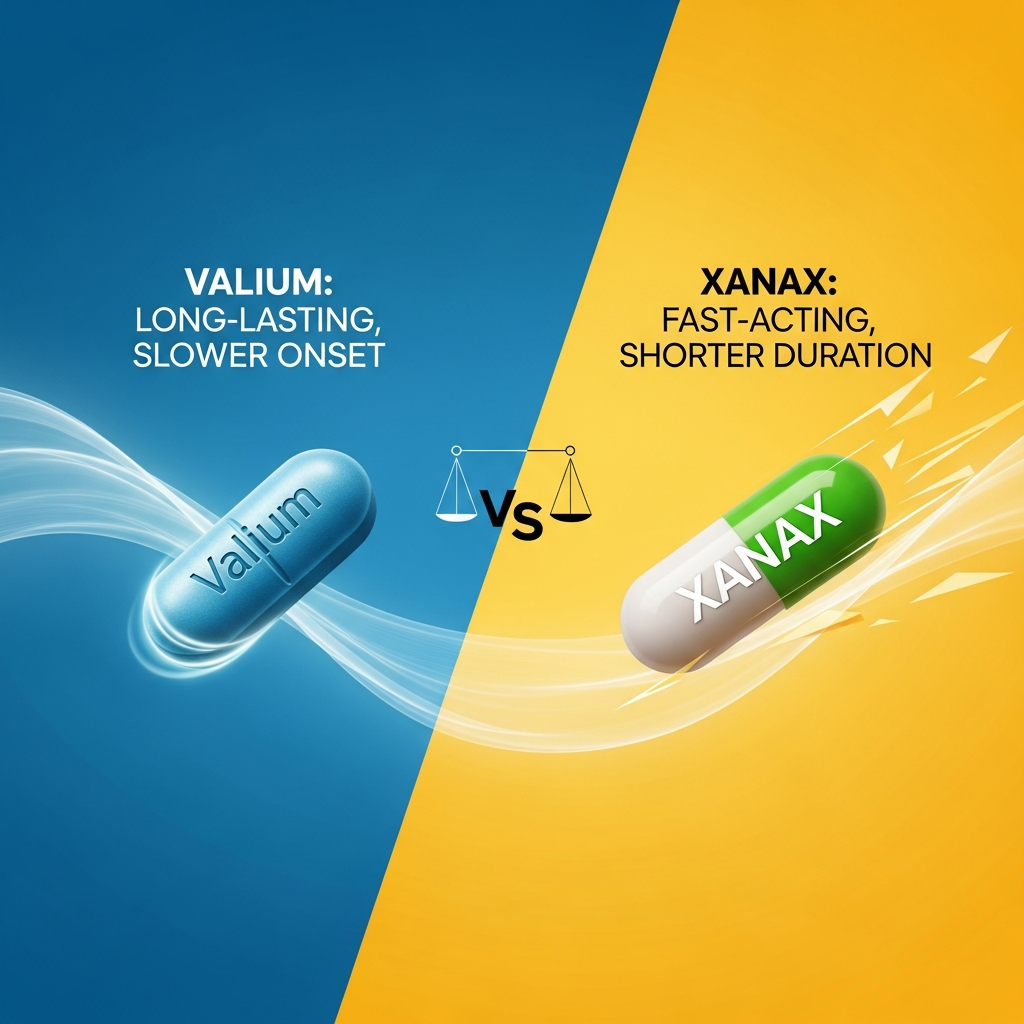
Comparison of Valium vs Xanax medications showing effects, duration, and dosage
Valium vs Xanax: A Comprehensive Guide for Anxiety Relief
When it comes to managing anxiety, panic attacks, or stress, two medications often come up: Valium (diazepam) and Xanax (alprazolam). Both belong to the benzodiazepine class, but they differ in onset, duration, half-life, and suitability for various conditions. Understanding these differences can help you and your doctor make informed decisions.
In this guide, we’ll break down how Valium and Xanax work, their effects, side effects, and safe usage, as well as answer the most commonly searched questions.
What is Valium?
Valium, or diazepam, is a long-acting benzodiazepine. It works by enhancing GABA, a neurotransmitter that slows down brain activity, helping to reduce anxiety, relax muscles, and prevent seizures.
Uses of Valium include:
- Anxiety disorders
- Panic attacks
- Muscle spasms
- Seizure management
- Alcohol withdrawal symptoms
Valium’s long half-life means it stays in the system for a prolonged period, which can make it more suitable for sustained relief rather than immediate calming.
What is Xanax?
Xanax, known as alprazolam, is a short-acting benzodiazepine. It also works by boosting GABA activity, but it acts faster and wears off sooner than Valium.
Uses of Xanax include:
- Generalized anxiety disorder (GAD)
- Panic disorder
- Short-term relief of acute anxiety episodes
Because of its rapid onset, Xanax is often preferred for situations requiring quick anxiety relief, but frequent dosing may increase the risk of dependence.
Valium vs Xanax: Key Differences
| Feature | Valium (Diazepam) | Xanax (Alprazolam) |
|---|---|---|
| Onset | 30–60 minutes | 15–60 minutes |
| Duration of effect | 6–12 hrs (5mg), 12–24 hrs (10mg) | 4–6 hrs |
| Half-life | 20–70 hrs | 11–20 hrs |
| Use case | Long-term anxiety, muscle relaxation, seizures | Short-term anxiety, panic attacks |
| Dependency risk | Lower for short-term use; higher long-term | Higher due to faster onset |
| Typical dose | 2–10 mg | 0.25–2 mg |
How Long Does Valium Last?
- 5 mg Valium: 6–12 hours
- 10 mg Valium: 12–24 hours
- Half-life: 20–70 hours
Individual metabolism, age, liver function, and other medications influence duration. Valium’s effects may be subtle at first, but it provides steady relief.
How Long Does Xanax Last?
- Effects typically last 4–6 hours
- Half-life: 11–20 hours
Because it acts quickly, Xanax may feel stronger initially but wears off sooner, often requiring multiple doses for extended anxiety relief.
What Does Valium Feel Like?
Valium can make you feel:
- Calm and relaxed
- Slightly drowsy or sedated
- Less tense or anxious
- Occasionally mild euphoria
Unlike Xanax, Valium gradually eases anxiety instead of providing rapid relief.
Dosage and Duration Comparison
| Dosage | Valium Duration | Xanax Equivalent |
|---|---|---|
| 5 mg | 6–12 hrs | 0.25–0.5 mg |
| 10 mg | 12–24 hrs | 0.5–1 mg |
| 15 mg | 18–24 hrs | 1–2 mg |
Note: Dosage equivalence is approximate. Always consult your doctor for personalized recommendations.
Side Effects and Risks
Both medications have similar side effects:
- Drowsiness or sedation
- Dizziness
- Impaired coordination
- Memory problems
- Dependence and withdrawal risk
Valium may be safer for long-term use, while Xanax’s fast onset makes it more likely to cause habit formation if taken frequently.
Real-World Insights
- Reddit and forum users often prefer Valium for long-lasting relief and Xanax for emergencies or panic attacks.
- Combining Xanax + Ambien or Valium + Xanax is strongly discouraged without medical supervision.
- Always track dosage, frequency, and effects, especially for medications with dependency potential.
Valium vs Xanax vs Lorazepam
For context, here’s how Valium and Xanax compare to another popular benzodiazepine, Lorazepam:
| Drug | Onset | Duration | Typical Use |
|---|---|---|---|
| Valium | 30–60 min | 12–24 hrs | Anxiety, muscle relaxation, seizures |
| Xanax | 15–60 min | 4–6 hrs | Panic attacks, acute anxiety |
| Lorazepam | 20–30 min | 6–8 hrs | Anxiety, sleep issues |
Safety Tips
- Follow prescribed doses strictly
- Avoid alcohol and other CNS depressants
- Do not mix medications without medical guidance
- Use short-term for panic, long-term only under supervision
- Discuss side effects, withdrawal, and tapering with your doctor
Conclusion
Both Valium and Xanax are effective benzodiazepines for anxiety and panic disorders, but the choice depends on your specific needs:
- Valium: Long-acting, steady relief, less frequent dosing
- Xanax: Fast-acting, short duration, higher dependency risk
Always consult a qualified healthcare provider to determine which medication is appropriate for your condition. Understanding dosage, onset, and side effects is essential for safe and effective use.
Frequently Asked Questions About Xanax
How long does a Valium last?
Valium’s duration depends on the dose and individual metabolism. Typical effects last 6–12 hours for 5mg and 12–24 hours for 10mg.
How long do Valiums take to kick in?
Most people feel relief within 30–60 minutes, though onset may vary depending on food intake and metabolism.
What does Valium feel like?
Valium can make you feel calm, relaxed, and less anxious, with possible mild drowsiness. Some users report a light, soothing effect.
How long does a 5mg Valium last?
A 5mg dose generally lasts 6–12 hours, though individual responses may vary.
How long does a 10mg Valium last?
A 10mg dose usually lasts 12–24 hours, offering extended relief from anxiety or tension.
How long does it take for a Valium to work?
Valium usually starts working within 30–60 minutes.
How long do the effects of Valium last?
Effects may last from 6–24 hours, depending on dosage and your body’s metabolism.
What is the half-life of Valium?
Valium has a half-life of 20–70 hours, meaning it stays in your system long after effects fade.
Is Xanax an antipsychotic drug?
No. Xanax is a benzodiazepine, not an antipsychotic. It’s used for anxiety and panic disorders.
Does Xanax help a headache?
Xanax is not prescribed for headaches, but it may relieve tension headaches indirectly if caused by stress or anxiety.
What is better than Xanax for anxiety?
Alternatives include SSRIs (like sertraline or escitalopram), buspirone, therapy, or other benzodiazepines under doctor supervision.
Can you take Valium and Xanax together?
Generally no, due to risks of sedation, respiratory depression, and increased dependency. Always consult a doctor.
Can you take Xanax with Ambien?
This combination should only be used under strict medical supervision, as it can cause excessive sedation and respiratory risk.
Can you take Valium with Xanax?
No, combining these benzodiazepines is dangerous without doctor guidance.
Medical Reviewers:
- Jane Thompson, PharmD, BCPS (15+ years in psychopharmacology)
- Michael Rivera, MD, Board-Certified Psychiatrist (ADHD specialist)